How to Choose the Best House Solar Power System?
Choosing a House Solar Power System is not simply a matter of buying the largest panel array. It is an energy planning decision involving sunlight, household demand, roof condition, storage, safety, and long-term maintenance. IRENA’s Renewable Capacity Statistics 2024 reported 473 gigawatts of new renewable capacity worldwide in 2023. Solar power contributed approximately 346 gigawatts, showing how quickly photovoltaic technology is expanding. Yet global growth does not guarantee that every home has suitable conditions.
Start with your actual electricity pattern. Check twelve months of utility bills, not one sunny month. A family using air conditioning at 7 p.m. may need battery storage, even with strong midday production. Shade from a chimney, nearby tree, or apartment building can reduce output noticeably. Roof age matters too. Replacing roofing after installation can add unnecessary labor and expense. Small details become expensive.
System sizing also requires professional judgment. A 5-kilowatt array may suit one home and underperform in another. The result depends on local solar radiation, roof direction, panel temperature, inverter losses, and future electricity use. The International Energy Agency’s Renewables 2023 report identifies solar PV as a central driver of renewable expansion, but it does not replace a property-specific assessment. I would not trust a quote based only on roof photographs. Ask for production estimates, equipment certifications, warranty terms, installer credentials, and battery assumptions. Compare expected annual generation with your measured consumption. The best House Solar Power System is rarely the biggest one; it is the system that fits your roof, budget, habits, and realistic energy goals. Some estimates will still be imperfect. Plan for that.
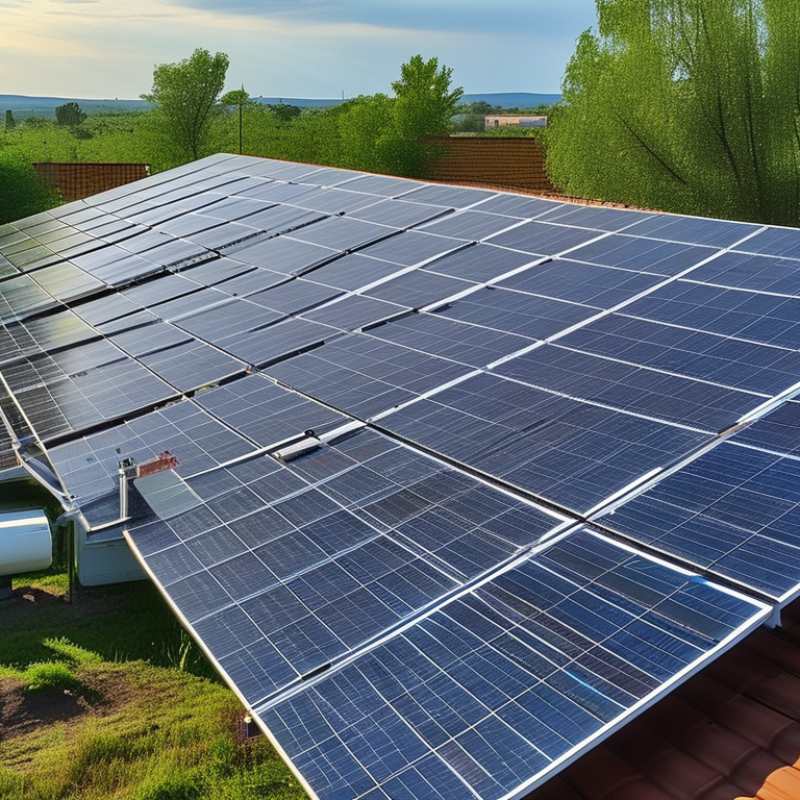
Assess Your Home’s Energy Needs and Solar Potential
How to Choose the Best House Solar Power System?
Assess Your Home’s Energy Needs and Solar Potential
A reliable solar plan begins with your actual electricity use, not a neighbor’s system size. Collect twelve months of utility bills and note seasonal changes. Air conditioning, electric heating, water heaters, and vehicle charging can sharply change demand. Record your daytime and nighttime usage when possible. A simple energy diary can reveal surprising waste.
Next, inspect the roof and surrounding area. Measure available roof space, orientation, slope, and shading from trees or nearby buildings. A roof may look sunny at noon but lose production during morning or winter shadows. Check the roof’s age and structural condition before installing equipment. Replacing an old roof later can add avoidable labor and removal costs.
A qualified solar professional should model expected production with local weather data and shading measurements. Ask for estimated annual output, system losses, maintenance needs, and performance under cloudy conditions. Battery storage may help if evening usage is high or outages are common, but it also adds cost and complexity. Review local electrical rules and use a licensed installer.
Do not chase the largest system. Oversizing can waste money if your household exports little electricity. My first estimate might overlook future appliances, changing work schedules, or a growing family. Recheck the numbers. Energy habits are not fixed, and solar decisions should leave room for honest revision.
How to Choose the Best House Solar Power System? – Assess Your Home’s Energy Needs and Solar Potential
Planning estimates for grid-connected residential solar systems. Actual results depend on local weather, roof orientation, equipment specifications, shading, temperature, and utility rules. | Home Energy Profile | Typical Monthly Electricity Use | Average Daily Use | Peak Sun Hours per Day | Roof Shading Level | Target Solar Offset | Estimated PV System Size | Estimated Annual Solar Production | Approximate Usable Roof Area | Recommended Assessment |
| Small, energy-efficient home | 450 kWh/month | 15 kWh/day | 4.5 hours | Low: less than 10% | 90% | 4.2 kW | Approximately 5,500 kWh/year | Approximately 42 m² | Suitable for a compact roof with mostly south-, southeast-, or southwest-facing exposure in the Northern Hemisphere. |
| Average family home | 900 kWh/month | 30 kWh/day | 5.0 hours | Low to moderate: 10–20% | 90% | 7.5 kW | Approximately 10,950 kWh/year | Approximately 75 m² | Review the last 12 months of utility bills and confirm that the roof can accommodate the required panel area without major obstructions. |
| Large home with electric heating or cooling | 1,500 kWh/month | 50 kWh/day | 5.5 hours | Low: less than 10% | 90% | 11.4 kW | Approximately 18,250 kWh/year | Approximately 114 m² | Check the service-panel capacity, roof structure, seasonal heating demand, and whether additional roof or ground-mounted space is available. |
| Average-use home with significant shade | 900 kWh/month | 30 kWh/day | 3.0 effective hours | High: more than 30% | 90% | 12.5 kW | Approximately 10,950 kWh/year | Approximately 125 m² | Conduct a shade analysis before sizing the system; trimming vegetation, changing panel placement, or using a less-shaded roof section may reduce the required capacity. |
| Home with future electric vehicle charging | 1,200 kWh/month | 40 kWh/day | 5.0 hours | Low to moderate: 10–20% | 90% | 10.0 kW | Approximately 14,600 kWh/year | Approximately 100 m² | Include the expected charging schedule and vehicle energy use in the load forecast rather than sizing the system only from current bills. |
Calculation assumptions: Estimated PV size uses the formula daily electricity use ÷ (peak sun hours × 0.80 system performance ratio). Annual production uses the estimated system size, peak sun hours, 365 days, and an 80% performance ratio. Roof-area estimates use approximately 10 m² of usable roof area per 1 kW of installed solar capacity, including practical spacing and layout limitations.
Evaluate Installation Costs, Incentives, Warranties, and Financing
How to Choose the Best House Solar Power System?
Installation cost should be judged by value, not the lowest quote. Berkeley Lab’s Tracking the Sun 2024 report placed the 2023 median residential solar price near $3.40 per watt before incentives. Your roof shape, electrical upgrades, permits, and battery choice can change that figure sharply. Request an itemized proposal showing equipment, labor, inspection fees, and expected annual production. A low price may hide weaker support or expensive future repairs.
Incentives deserve careful checking. The U.S. Department of Energy explains that eligible homeowners may claim a federal tax credit of up to 30% for qualifying clean-energy improvements. Local rebates and utility programs may have income limits, deadlines, or capacity caps. Confirm every rule through official government sources. SEIA’s 2024 Solar Market Insight Report recorded about 6.8 gigawatts of new residential solar capacity in 2023, showing strong demand, but popularity does not guarantee a suitable system. Financing also needs honest comparison. Loans, leases, and power-purchase agreements affect ownership, taxes, savings, and home resale value. Read the total repayment amount, not only the monthly payment.
Tips: Compare at least three proposals. Check product and workmanship warranties separately. Ask who handles roof leaks, monitoring failures, and warranty claims. A 25-year performance promise sounds impressive, but unclear exclusions can weaken it. I would also test the savings estimate with lower production and higher utility prices. That less-perfect scenario is often more useful.
How to Choose the Best House Solar Power System?
Installation Costs, Incentives, Warranties, and Financing
How to read this chart: The figures show an illustrative U.S. residential benchmark using an estimated installed price of $2.80 per watt before local incentives. The modeled incentive represents a 30% reduction in eligible costs; actual savings depend on tax liability, location, system eligibility, and current regulations.
When comparing proposals, evaluate the total installed price, expected annual energy production, equipment and workmanship warranties, and the total cost of financing. Solar panels commonly include long performance warranties, while inverters and installation workmanship may have different coverage periods. A lower monthly payment can still result in a higher lifetime cost if the loan term or interest rate is unfavorable.
Reference framework: U.S. residential solar cost ranges and federal incentive structures commonly reported by public energy agencies and industry market studies. Confirm current incentives and financing terms with qualified local professionals.
Select Qualified Installers and Review System Proposals
How to Choose the Best House Solar Power System?
A qualified installer can shape your system’s safety, output, and long-term value. Check their electrical credentials, insurance, training records, and local project experience. Ask who will perform the installation, not only who prepares the sales visit. A reliable contractor should explain roof conditions, wiring routes, maintenance access, and expected energy production in clear language.
Request at least three detailed proposals. Each proposal should list panel capacity, inverter type, battery size, mounting hardware, labor, permits, warranties, and estimated annual generation. Compare assumptions, not just prices. A low estimate may ignore shading from a nearby tree or winter sunlight losses. One practical lesson is easy to miss: larger equipment does not always mean better performance. I once considered roof space the main issue, but household usage patterns mattered more.
Tips: Ask installers to show production estimates month by month. Confirm whether monitoring is included. Read warranty exclusions carefully. Check the contract for replacement responsibility and project delays. Request references from homes with similar roofs. Do not accept vague promises about savings. A proposal should explain its calculations. If you cannot understand a fee, pause and ask for a written explanation. Some decisions remain uncertain, especially future electricity use, so leave room for review before signing.
Plan Installation, Grid Connection, Maintenance, and Future Expansion
How to Choose the Best House Solar Power System?
A reliable solar plan begins with your household’s actual electricity profile. Review twelve months of bills, then compare daytime demand with evening consumption. The IEA PVPS Trends 2024 report recorded about 456 GW of new photovoltaic capacity worldwide in 2023. This growth does not make every roof suitable. A professional survey should check shading, roof age, structural strength, cable routes, and local fire-access rules. Leave space for safe maintenance. Small details matter.
Grid connection needs early attention. Ask the utility about export limits, protection settings, inspection steps, and approval timelines. Some homes may need a smaller inverter or export-control equipment. Select an inverter with spare capacity only when the utility permits future changes. A battery can improve self-consumption, but its value depends on tariffs, outage priorities, and daily load patterns. The U.S. National Renewable Energy Laboratory reports typical photovoltaic degradation near 0.5% annually. Therefore, avoid sizing the system only for today’s output.
Plan expansion before installation. Install wider conduits, reserve distribution-board space, and confirm the roof can carry additional modules later. Keep circuit diagrams, permits, warranty records, and commissioning readings in one file. Clean modules when dirt visibly reduces production, and arrange periodic electrical inspections. A common mistake is buying maximum capacity immediately. It can increase upfront costs and create export problems. My practical preference is staged growth, although future electricity prices remain uncertain. Forecasts are not guarantees.
