China Top 10 Exterior Plywood Manufacturers
China’s exterior plywood market includes large exporters, regional mills, and specialist producers. Comparing ten manufacturers can help buyers see differences in product focus, production scale, and export experience. But a polished website is not proof of consistent quality. Request recent test reports, confirm product specifications, and check that the quoted panel matches the panel being supplied.
Exterior Plywood is designed for exposure to moisture, but “exterior” does not mean maintenance-free or suitable for every installation. Bond performance, veneer quality, panel thickness, edge sealing, and site detailing all matter. A cut edge left unsealed can absorb water. A poorly ventilated wall can trap it. Small details, big consequences.
As a fictional technical voice created for this introduction, materials specialist Lin Wei puts it this way: “A panel’s outdoor performance depends on its bond, its build, and the details around it.” This is an original editorial line, not a verified quotation from a real expert. Use it as a reminder, not evidence. The ranking that follows should be treated as a starting point, since factories change, product lines vary, and public information may be incomplete. Compare samples, documentation, and project requirements before choosing a supplier. Even careful research has limits.
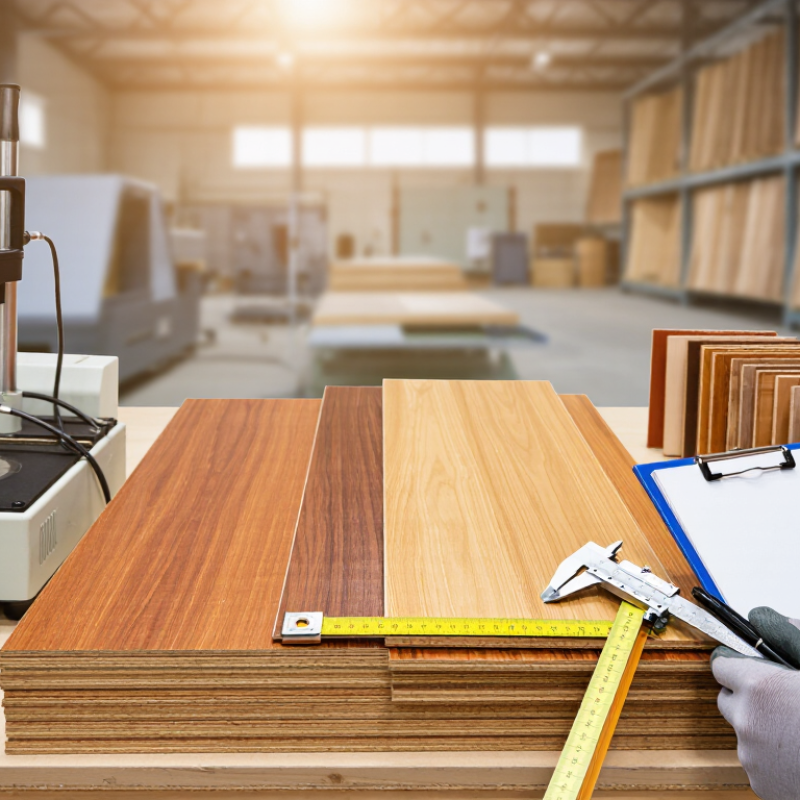
What Defines Exterior Plywood and Its Key Performance Standards
Exterior plywood is built to tolerate wetting and drying better than standard interior panels. Its veneers are bonded with moisture-resistant adhesive, and the panel is manufactured for a defined exposure class. “Exterior” does not mean waterproof. Standing water, exposed edges, and poor drainage can still cause swelling or surface checking. Appearance can mislead. A smooth face tells little about the glue line inside.
Performance standards help buyers compare panels more reliably. Depending on the market, specifications may refer to bond durability, veneer quality, thickness, structural grade, and permitted use. For example, EN 636 distinguishes plywood for dry, humid, and exterior conditions; other regions use different grading systems. Check the panel stamp and technical sheet, not just the product label. Look for the stated standard, grade, thickness, and intended application. On site, inspect cut edges and keep panels raised from wet ground before installation. A well-rated sheet can still fail when water repeatedly reaches an unsealed edge. That detail is easy to miss. Even experienced crews sometimes assume an exterior rating removes the need for careful detailing. It does not.
Exterior Plywood: Common Sheet Formats and Performance Standards
Common nominal sheet dimensions (millimetres). Sheet size is not a measure of exterior durability.
The 4 × 8 ft format is approximately 1,219 × 2,438 mm; a common metric format is 1,250 × 2,500 mm. Actual availability varies by market and supplier. Exterior suitability depends on the panel’s specified bond and grade—not its dimensions. In Europe, EN 314-2 bond Class 3 and EN 636-3 address exterior use; in the United States, structural plywood panels may be specified under PS 1 or PS 2. Check the applicable product standard and project requirements.
How China’s Exterior Plywood Manufacturing Sector Is Organized
China’s exterior plywood sector is organized as a chain, not a single factory model. Forest-resource suppliers and veneer mills feed panel plants, where workers dry veneers, apply adhesive, arrange layers, and hot-press sheets. The chain is layered. Some manufacturers control several stages; others buy veneers or outsource testing, creating differences in traceability and process control.
Scale matters, but product categories need careful reading. FAO’s 2023 forest-products statistics put global wood-based-panel production at about 401 million cubic metres in 2022. That total includes plywood, fibreboard, and particleboard, so it does not measure exterior-grade plywood alone. It does show the size of the wider supply base surrounding China’s panel industry. Exterior products also depend on veneer quality, adhesive selection, press conditions, and checks for bonding and moisture resistance.
Manufacturers typically serve construction, packaging, and export markets through separate production and quality-control workflows. Buyers should examine panel thickness, face-veneer condition, bonding performance, and test documentation for the intended exposure. A product described as “exterior” is not automatically suited to every climate or installation. Factory capacity figures can also obscure uneven quality between production lines; that distinction is easy to miss in supplier comparisons.
Criteria for Evaluating China’s Leading Exterior Plywood Manufacturers
Evaluating exterior plywood manufacturers in China takes more than comparing quoted prices. Buyers should check the panel’s intended exposure, thickness, veneer composition, and bonding performance. Ask for recent test reports that identify the tested product, method, and result. A certificate alone may not describe the plywood being offered.
Look closely at the core and edges. Gaps, overlapping veneers, and rough patches can signal inconsistent production. Ask how moisture resistance is assessed, and whether quality checks cover more than occasional samples. Details matter. A factory visit or a clear production record can help confirm whether reported capacity matches actual processes. Still, one inspection cannot predict every shipment.
Reliable suppliers should provide consistent specifications, traceable batches, and practical answers about packaging and lead times. Request samples from the same product grade you plan to order, then inspect thickness, surface finish, and bonding after suitable exposure tests. Compare results, not just brochures. Communication also matters: vague replies about tolerances or test conditions deserve follow-up. No checklist is perfect. Buyers should record agreed requirements in the purchase documents and reassess performance after delivery, since even a promising sample may not represent every batch.
Profiles of 10 Notable Exterior Plywood Manufacturers in China
China’s exterior plywood sector spans large integrated mills and smaller, export-focused plants. FAO’s 2022 Forest Products statistics identify China as the world’s leading plywood producer, giving buyers a broad field to assess. These ten profiles compare capabilities rather than promote brands: veneer selection, adhesive control, hot-press capacity, sanding, and batch traceability. Useful details include face-veneer thickness, core gaps, and whether panels stay flat after moisture exposure. Small defects matter.
Some manufacturers emphasize consistent panel dimensions and calibrated thickness; others focus on mixed hardwood cores or custom sizes. A credible profile should distinguish laboratory test results from sales claims and state the tested panel grade. Ask for recent bond-strength and water-resistance reports, plus production records linked to the sampled batch. FAO data describe production, not exterior-grade quality, so output rankings cannot replace factory audits. That distinction is easy to miss. Comparisons also have limits: public information rarely reveals how much a plant’s quality varies between shifts. A careful buyer should verify specifications against physical samples and intended exposure conditions.
China Top 10 Exterior Plywood Manufacturers - Profiles of 10 Notable Exterior Plywood Manufacturers in China
The entries below are anonymized manufacturing profiles based on common exterior-plywood product categories. They are not verified company records or a ranked list. Product construction, availability, and performance vary by supplier and should be confirmed against current technical data and test reports.
| Profile | Typical product focus | Common construction options | Exterior-bonding considerations | Typical application |
|---|---|---|---|---|
| 01 · Structural exterior panel | Panels intended for structural use in exposed or weather-protected building assemblies. | Layered veneer construction; species, thickness, and grade depend on the product specification. | Check the declared exterior-use classification and structural performance; appearance alone does not establish suitability. | Sheathing and other specified structural applications. |
| 02 · Film-faced formwork panel | Concrete-form panels with a coated face designed to provide a smoother surface and aid release. | Veneer core with a resin-impregnated film surface; edge sealing and core composition vary. | Confirm bonding class, coating type, edge protection, and stated reuse conditions with the supplier. | Concrete formwork and temporary construction works. |
| 03 · Hardwood-face exterior panel | Plywood with hardwood face veneers for applications requiring a harder or more decorative surface. | Hardwood face veneers over a hardwood or mixed-species core; face grade is product-specific. | Verify exterior bonding separately from face-veneer species and appearance grade. | Exterior joinery, cladding substrates, and utility panels where specified. |
| 04 · Eucalyptus-veneer panel | Panels using eucalyptus veneers in some or all plies. | Eucalyptus face and/or core veneers; lay-up and thickness options vary by manufacturer. | Request the product’s bond test results and intended-use classification; species alone does not define durability. | General construction, packaging, and exterior projects where the specified grade is suitable. |
| 05 · Mixed-hardwood core panel | Utility and construction plywood made with a multi-species hardwood core. | Mixed hardwood plies with face veneers selected according to the requested appearance or grade. | Core species and veneer-joint quality can affect performance; ask for the declared grade and test documentation. | Construction and industrial uses subject to the panel’s specification. |
| 06 · Poplar-core panel | Lightweight plywood options using poplar veneers in the core. | Poplar core with face veneers that may be poplar or another specified species. | Confirm intended exposure, bond durability, and structural grade; lightweight construction is not itself an exterior rating. | Light-duty construction, interior work, or protected exterior use when the grade permits. |
| 07 · Birch-face panel | Panels selected for a relatively smooth, uniform face veneer. | Birch face veneers with a birch or mixed-wood core, depending on the product. | A birch face does not establish exterior suitability; verify the bonding class and use conditions. | Decorative or fabrication work where the specified panel grade is appropriate. |
| 08 · Marine-use specification panel | Panels supplied against a marine or high-moisture-use specification. | Veneer species, core quality, and face grade are governed by the named specification and order. | “Marine” is not a universal grade; confirm the applicable standard, edition, and supporting test reports. | Marine or wet-service projects only when the panel meets the project’s stated requirements. |
| 09 · Exterior decorative-face panel | Panels combining a selected face appearance with a bond intended for exterior conditions. | Decorative face veneer over a specified core; finishing and overlay options vary. | Check both bond durability and the need for protective finishing, sealing, or maintenance. | Visible exterior elements when designed and finished for the exposure conditions. |
| 10 · Cut-to-size export panel | Panels manufactured or cut to buyer-defined dimensions, grades, and packing requirements. | Species, thickness, face grade, and edge treatment are specified in the purchase order. | Agree on the applicable standard, tolerances, inspection method, and documentation before production. | Export, fabrication, and project supply requiring specified panel dimensions. |
Before purchase, request current product specifications, applicable-standard details, bond-quality test reports, emissions documentation where required, and confirmation that the panel is suitable for the project’s exposure conditions.
How to Compare Suppliers, Products, and Export Capabilities
Comparing China’s top exterior plywood manufacturers takes more than checking a catalogue. Ask each shortlisted supplier for the same details: veneer species, panel thickness, core construction, adhesive type, and surface grade. Then compare written specifications, not just product photos. A 12-millimeter panel may vary in thickness tolerance, edge quality, and bonding performance. Request recent test reports and confirm that their scope matches the product you plan to buy. Samples help, too. Inspect cut edges, weigh panels, and look for gaps or uneven veneers.
Export capability is easier to judge through specific evidence. Ask about monthly production capacity, typical lead times, packaging for container shipment, and experience preparing documents for your destination market. Check whether the supplier can provide moisture-resistant packing and clear pallet labels. These details affect arrival condition and receiving time. A factory visit or live production video can clarify how quality checks happen, though neither guarantees every batch will match. No spreadsheet catches everything. Keep records of sample results, agreed tolerances, and inspection findings. Even a careful comparison has limits; small differences in grading language can be missed unless both sides define them in writing.