Top 10 Soundproof Aluminum Folding Doors for Global Buyers
Choosing the right Soundproof aluminum folding doors requires more than comparing prices or attractive photographs. Global buyers often face different building codes, climate conditions, and installation practices. This guide introduces ten carefully considered options for residential, commercial, hospitality, and public spaces. Each choice deserves attention for acoustic performance, aluminum strength, weather sealing, operation, and long-term maintenance.
In real projects, sound control depends on the complete door system. Glass thickness, interlocking panels, compression seals, hinges, tracks, and surrounding walls all influence results. A door may advertise strong noise reduction, yet perform differently after poor installation. Details matter. We will examine available acoustic ratings, testing methods, panel configurations, and practical installation requirements. We will also consider rain, wind, heat, humidity, and frequent daily use.
No ranking is perfect. Product availability and certification can change between regions. Some doors may perform well in a quiet office but struggle beside heavy traffic or machinery. That limitation deserves honest attention. Buyers should request current technical documents, tested laboratory data, warranty terms, and local service support before ordering. Experienced manufacturers can explain the difference between laboratory performance and field results. Qualified installers can verify opening dimensions, floor levels, drainage, and seal alignment. These steps reduce costly surprises.
The following overview is designed to support informed comparison. It does not replace project-specific acoustic advice or local compliance checks. Instead, it provides a practical starting point for selecting durable, attractive, and genuinely quieter folding door systems worldwide.
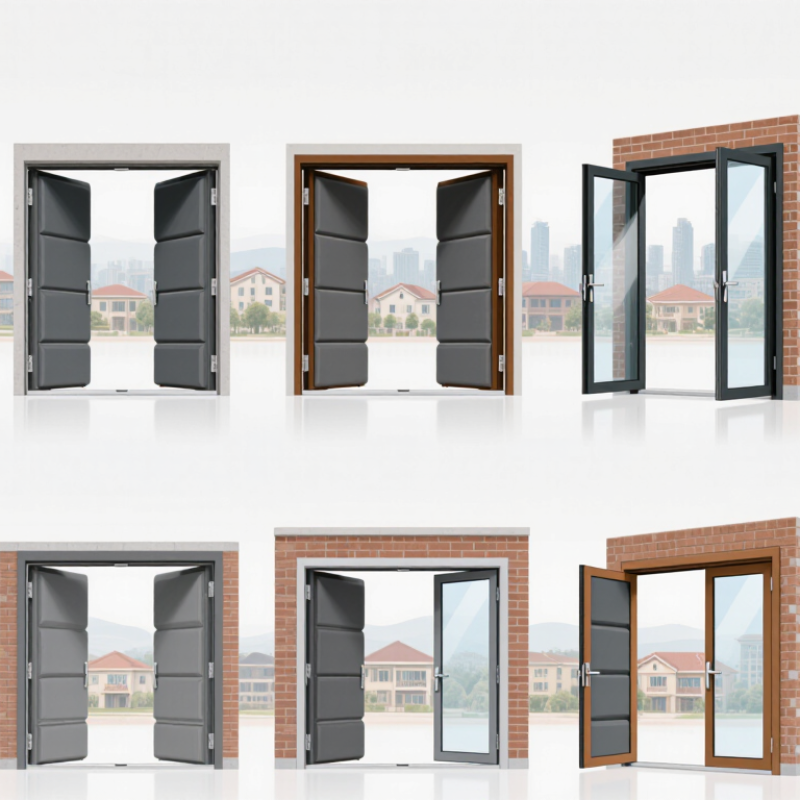
What Makes Aluminum Folding Doors Soundproof and Suitable for Global Use
Soundproof aluminum folding doors rely on several coordinated details, not aluminum alone. A rigid aluminum frame limits vibration and keeps panels aligned during repeated movement. Laminated acoustic glass adds a flexible layer that reduces speech, traffic, and machinery noise. Continuous EPDM gaskets close the narrow gaps around each panel. Those gaps matter most.
Interlocking meeting stiles improve the seal where folding panels join. Multi-point locks apply even pressure across the opening, while precision rollers help prevent sagging. Thermal breaks can also reduce heat transfer and condensation, which supports stable acoustic performance in different climates. Real-world testing matters. Buyers should request independently verified acoustic ratings, air-leakage data, and installation guidance rather than trusting the word “soundproof.”
Global projects add practical concerns. Aluminum resists corrosion when the finish and drainage design suit coastal or humid environments. Reinforced frames may be necessary for larger openings or stronger wind exposure. Local installers should check wall structure, floor level, hardware compatibility, and emergency access requirements. No folding door is completely silent. Poor alignment, worn seals, or careless installation can sharply reduce performance. This is where specifications can look impressive but disappoint on site. A careful buyer should compare tested assemblies, not isolated glass or frame claims.
Key Performance Standards for Evaluating Soundproof Folding Doors
Top 10 Soundproof Aluminum Folding Doors for Global Buyers
For global buyers, acoustic performance starts with verified testing, not attractive brochures. ISO 10140 measures airborne sound insulation in laboratories, while ISO 717-1 converts results into an Rw rating. ASTM E90 and ASTM E413 support similar evaluation through STC values. These figures are useful, but they are not interchangeable without checking the test method.
A folding door’s weak points are usually the meeting stiles, floor track, corner seals, and glazing joints. A small visible gap can reduce real-world performance significantly. The European Environment Agency’s Noise in Europe 2020 report estimated that over 20% of Europeans face harmful long-term environmental noise exposure. The WHO 2018 guidelines recommend lower night-time noise levels to protect sleep. Therefore, buyers should request laboratory results for the complete door assembly, including frame, panels, seals, glass, and hardware. A higher Rw value is not automatically better in every room. Low-frequency traffic noise may still pass through.
Tips: Ask for Rw and STC data together. Check the tested size and installation method. Confirm whether seals remain compressed after repeated folding cycles. In my experience, this detail is often overlooked. It should not be. Also review air leakage, because poor sealing can undermine an impressive laboratory rating. Performance claims without traceable reports deserve careful questioning.
Installation, Maintenance, and Long-Term Performance Considerations
For global buyers, soundproof aluminum folding doors deserve careful attention beyond their advertised acoustic rating. Installation quality often determines real-world performance. The opening must be square, level, and strong enough to support the folding panels. Uneven floors can create gaps beneath the door. Those gaps quickly weaken sound control.
Use corrosion-resistant anchors suited to the wall structure and local climate. Seal the frame continuously, especially at corners and panel joints. A professional installer should check compression seals with a thin paper test. The paper should resist light pulling when the door is closed. Allow room for thermal movement in areas with large temperature changes. Small errors matter.
Maintenance should follow a written schedule. Clean tracks regularly, remove grit, and lubricate approved moving parts sparingly. Excess lubricant attracts dust. Inspect rollers, hinges, handles, seals, and drainage paths every few months. Replace flattened or cracked seals before they affect acoustic performance. Water should never remain inside the lower track.
Long-term performance also depends on daily use. Do not force a misaligned panel. Stop and inspect it. In busy commercial spaces, protective stops can reduce impact damage. Acoustic ratings from laboratories may not match a finished building. Wall construction, adjacent glazing, and installation gaps can change results. This is easy to overlook. A practical review after six months can reveal noise leaks, loose hardware, or drainage problems that initial testing missed. Periodic adjustment is not a defect; it is part of responsible ownership.
How Global Buyers Can Compare Suppliers, Prices, and Certifications
Global buyers should compare soundproof aluminum folding doors through tested performance, not attractive catalog images. Request the acoustic rating, such as STC or Rw, with the complete test report. Check the tested door size, glass type, seals, and laboratory conditions. A high rating on a small sample may not represent a full-size installation. Details matter.
Supplier experience becomes visible during technical discussions. Ask for section drawings, hardware specifications, production photos, and references from similar climates. Confirm whether the supplier controls aluminum extrusion, glazing, sealing, and final assembly. An independent factory inspection can reveal inconsistent gaps or weak corner joints. We have seen small sealing defects reduce real-world acoustic performance significantly. That lesson is easy to overlook.
Price comparisons should include packaging, tooling, freight, duties, installation guidance, and replacement parts. Compare identical specifications, including panel thickness, glass layers, frame depth, and lock quality. A low quotation may exclude acoustic testing or protective packaging. Request a written warranty with clear response times. Verify certificates directly with the issuing laboratory or certification body, and check their validity dates. Depending on the destination, buyers may also need fire, safety, environmental, or building-code documentation. No supplier should avoid these questions. Yet paperwork alone cannot prove durability; a pre-production sample and a witnessed operating test often provide more honest evidence.
